
ST. HELENA
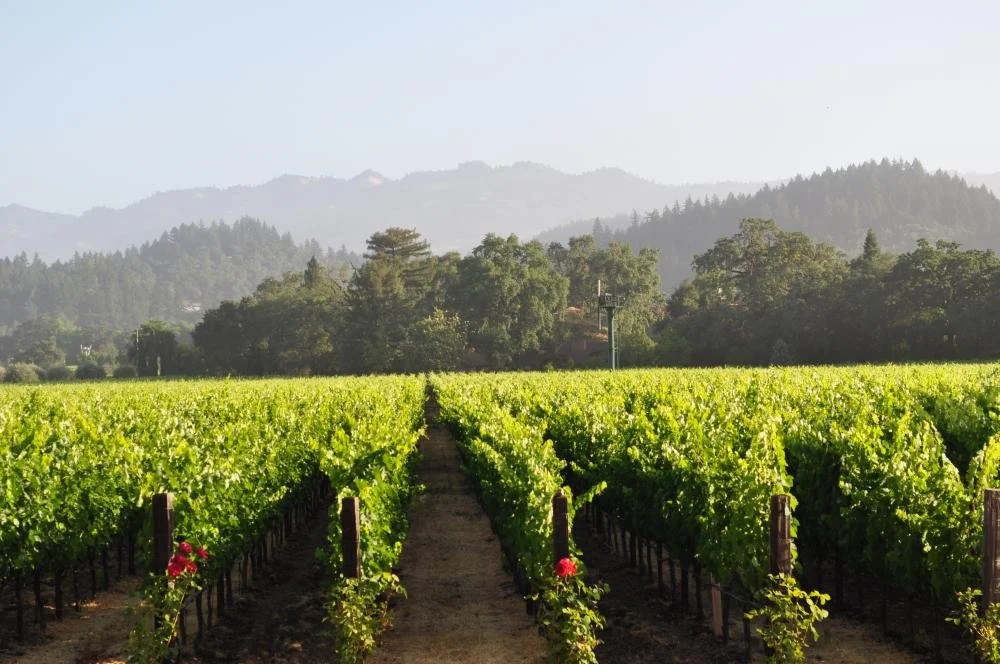
St. Helena is what most people picture when they imagine Napa Valley — a tree-lined Main Street of brick storefronts, vineyards pressing close on every side, and a history that runs straight through the early years of California winemaking. The town was founded in 1854 when Henry Still and Charles Walters bought 126 acres west of present-day Main Street and offered free lots to anyone who would open a business. Incorporation followed on March 24, 1876, and by then the area had already become the center of commercial winegrowing in the valley.
The town's wine pedigree is profound. Charles Krug, a Prussian immigrant, founded Napa Valley's oldest winery in 1861 at 2800 Main Street; the property became a California Historical Landmark and joined the National Register in 1974. Beringer Vineyards followed in 1876 and is the oldest continuously operating winery in the valley; the Beringer Rhine House, completed in 1884 as Frederick Beringer's residence, remains a National Register property and a defining piece of Main Street architecture. Just north of town, the Bale Grist Mill State Historic Park preserves a water-powered mill built in 1846 by Dr. Edward Turner Bale, with a thirty-six-foot wheel that still turns — one of only two water-driven grist mills remaining west of the Mississippi.
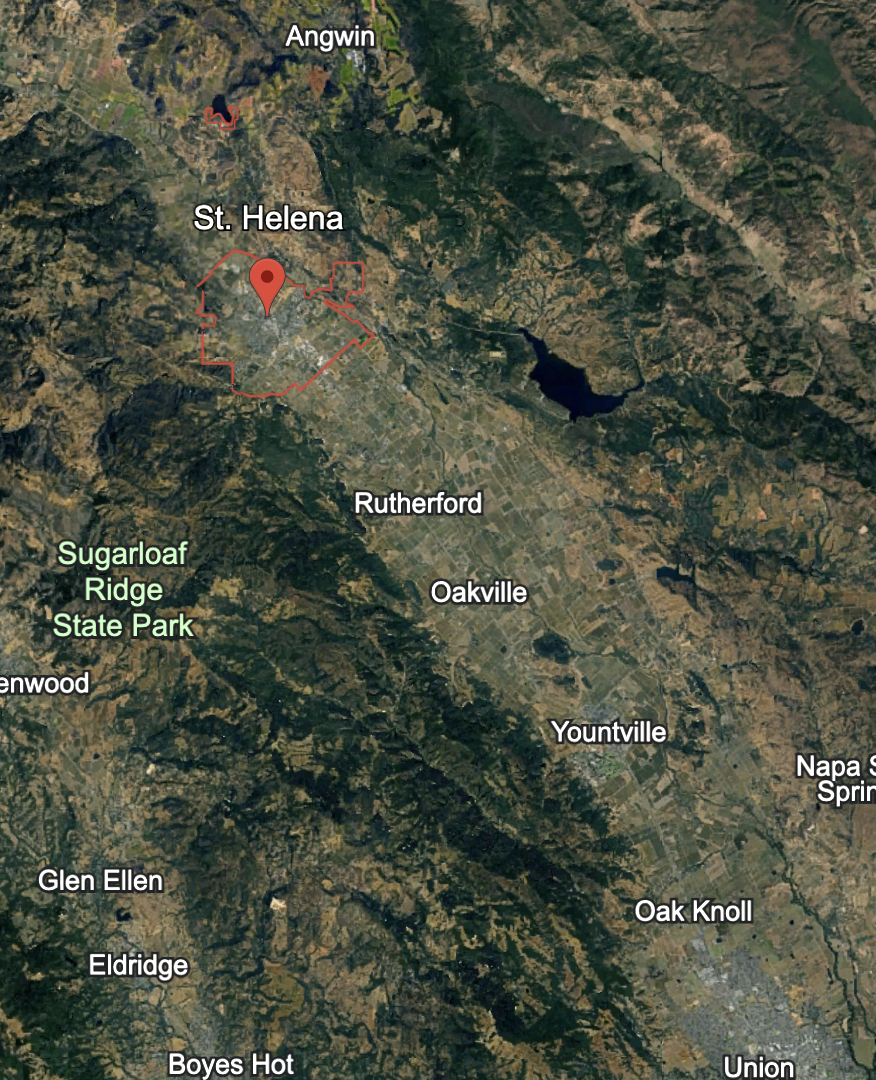
Lifestyle here balances quiet residential streets with a downtown that punches well above its size. The 2020 census recorded a population of 5,430, but the daily life of St. Helena draws in residents from across the upvalley, and the city's median household income reflects both that and the gravitational pull of agriculture's wealth. A long-standing ordinance restricts formula chain businesses, which has kept Main Street firmly local — Woodhouse Chocolate occupies an 1890s brick building, Model Bakery has been turning out English muffins for the better part of a century, and a steady rotation of fine dining, galleries, and independent boutiques fills the rest. The Silverado Museum on Library Lane, founded in 1969 by Norman and Charlotte Strouse, holds the largest displayed collection of Robert Louis Stevenson's belongings in the world.
The Culinary Institute of America at Greystone gives St. Helena another layer of identity. Housed in an 1889 stone structure built by William Bowers Bourn II as the world's largest stone winery at the time, the CIA's first branch campus opened in 1995 after a $15 million renovation and continues to train chefs, baking and pastry professionals, and wine and beverage students at 2555 Main Street. The campus restaurant, shop, and public programs give residents a constant supply of food culture year-round.
For St. Helena real estate, the appeal is enduring. Historic Victorians sit a few blocks from the highway alongside modern farmhouses and substantial vineyard estates. Buyers come for the postcard quality of the place and stay for what they discover beneath it: a working community with a hospital, a college campus, a public library, and an unmistakable sense that the people who live here intend to keep it the way it is. For those entering Napa Valley for the first time, St. Helena reads as the heart of the experience. For longtime residents, it remains what it has always been: the historic and commercial center of upvalley life.
