
WEST SONOMA COAST AVA
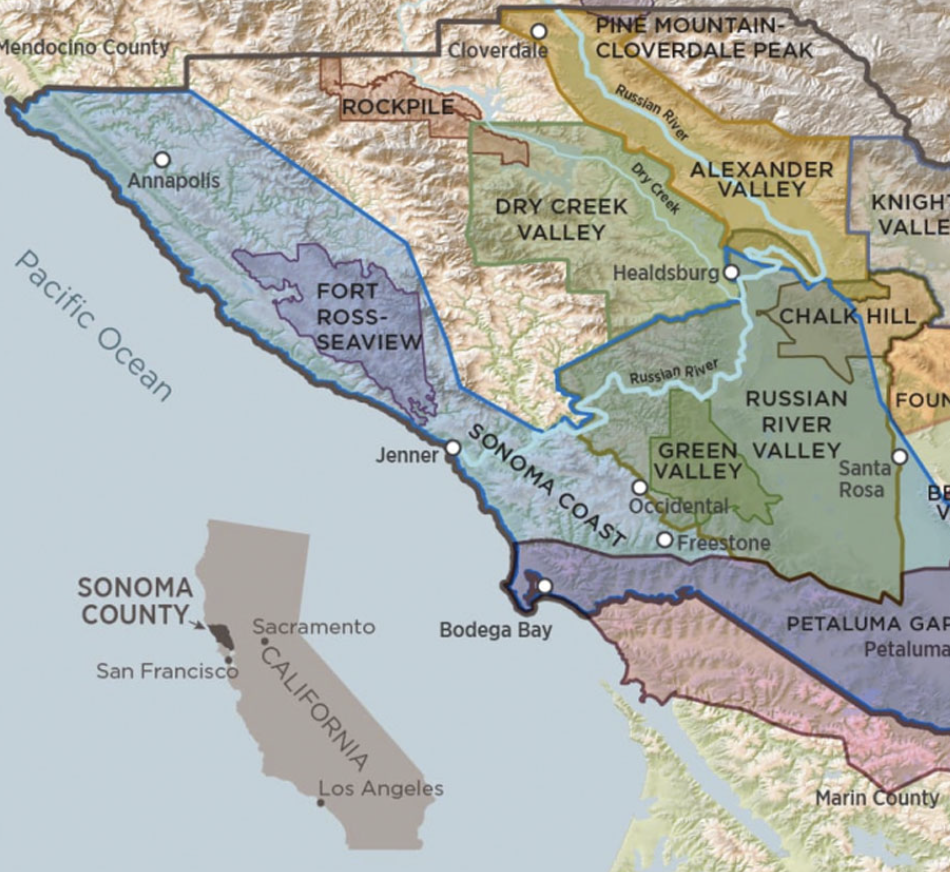
The West Sonoma Coast AVA represents the formal recognition of what coastal growers had been calling the "true Sonoma Coast" for nearly two decades. The Alcohol and Tobacco Tax and Trade Bureau approved it on May 23, 2022, after a campaign of more than a decade led by the West Sonoma Coast Vintners and consultant Patrick Shabram. The AVA encompasses 141,846 acres along the westernmost sliver of Sonoma County, from the Mendocino border in the north down through Freestone and Occidental in the south, and entirely contains the older Fort Ross-Seaview AVA.
What makes West Sonoma Coast distinct is its strict proximity to the Pacific. The original Sonoma Coast AVA, approved in 1987, sprawled across 500,000 acres and included vineyards more than 40 miles inland, which growers along the actual coast considered nonsensical from a terroir standpoint. The new appellation covers three loose sub-regions from north to south: Annapolis in the rugged hills near the Mendocino line, the high-elevation Fort Ross-Seaview, and Freestone-Occidental in the cool hills above Sebastopol. Only about 1,028 acres are planted to vines across roughly 47 commercial vineyards. Soils vary from coastal sandstone and shale on the ridges to Goldridge sandy loam in the more inland Sebastopol-Occidental hills.
Climate here is California viticulture at the absolute edge of viability. The Pacific exerts constant influence, with persistent fog, cold afternoon winds, and rainfall that can reach four times that of London in certain ridgetop sites. Summer night temperatures drop sharply, the growing season runs long, and grapes ripen slowly enough to develop physiological maturity at lower sugar levels than virtually anywhere else in California. Pinot Noir and Chardonnay dominate, with Syrah a serious specialty in select sites. The resulting wines show what growers describe as a maritime signature: pronounced acidity, ripe fruit at modest alcohol, saline minerality, and a textural tension that ages beautifully.
Notable producers include some of California's most celebrated cool-climate names. David Hirsch planted Hirsch Vineyards in 1980 in what is now Fort Ross-Seaview and effectively launched the modern era of extreme coastal viticulture. Peay Vineyards, founded by brothers Andy and Nick Peay with winemaker Vanessa Wong in the late 1990s, sits in the far northwestern Annapolis section with its first wines released in 2001. Failla Wines, founded by winemaker Ehren Jordan, and Littorai Wines, founded by Burgundy-trained Ted Lemon in 1993, both work extensively with West Sonoma Coast fruit. Flowers Vineyards, Marcassin, Williams Selyem, Paul Hobbs, Joseph Phelps Freestone, DuMOL, Cobb Wines, Wayfarer, Senses Wines, Occidental, and Marine Layer round out an extraordinary roster.
For buyers, the West Sonoma Coast offers something unique in California: genuine ocean-influenced land within striking distance of Healdsburg and Sebastopol, with the kind of forested ridges, working dairy heritage, and Burgundy-comparable ambition that defines the next chapter of California fine wine.
