
OAKVILLE / RUTHERFORD
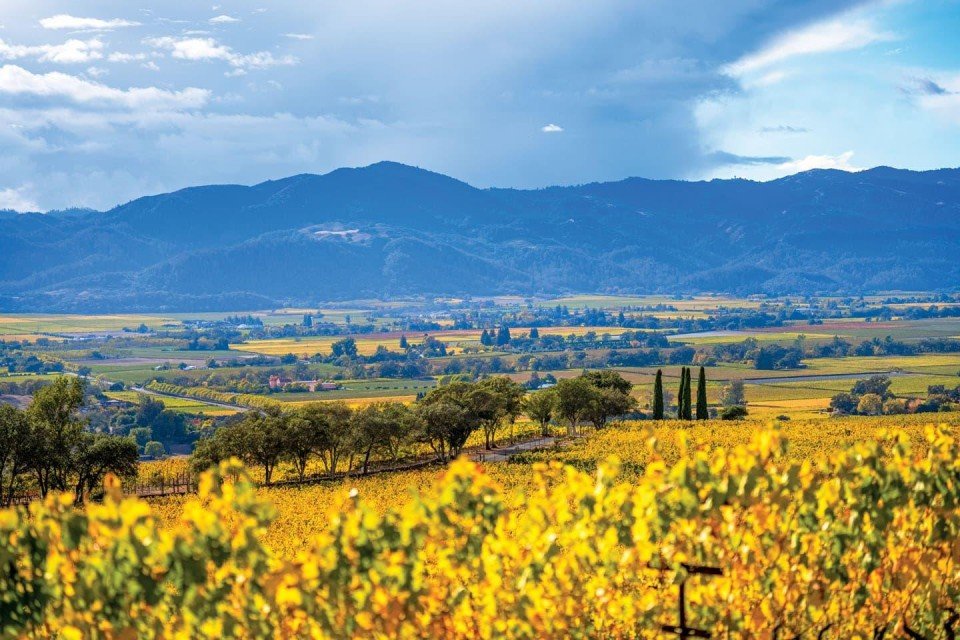
Between Yountville and St. Helena, Highway 29 passes through two communities that barely register as towns and yet sit at the very heart of Napa Valley's identity. Oakville and Rutherford are unincorporated census-designated places whose populations — 49 in Oakville and 115 in Rutherford at the 2020 census — give some sense of just how thoroughly agriculture has won out over development. There is no downtown in either, no stoplight on the highway between them, and the land that does exist is, acre for acre, among the most coveted on earth.
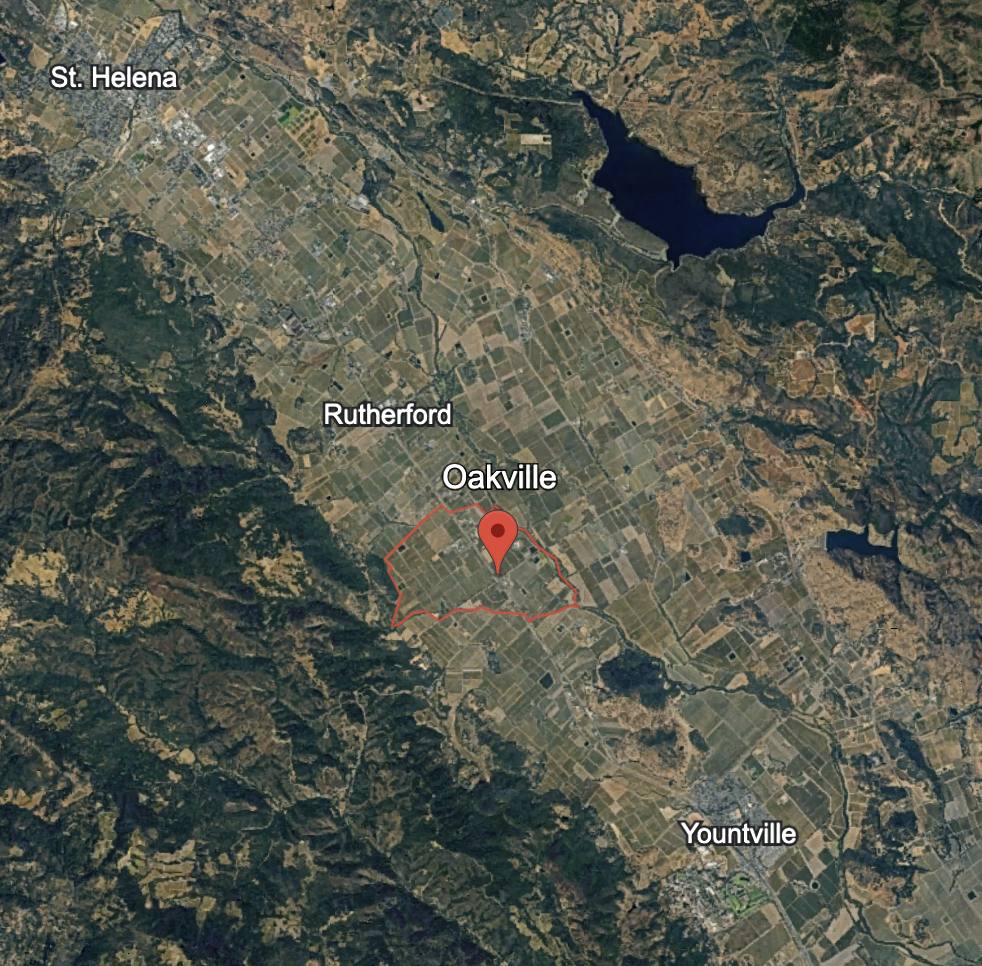
Oakville's recorded history begins in the 1860s, when the village grew up around a Napa Valley Railroad water stop founded by Samuel Brannan. The name came from the dense groves of valley oaks that once defined the area. H.W. Crabb bought 240 acres in 1868 and established what would become the legendary To Kalon vineyard — Greek for "the beautiful" — which grew to 430 acres by 1880 and remains the source of some of the most expensive Cabernet Sauvignon in the world. In 1903 the USDA established an experimental vineyard station here that the University of California, Davis still operates. Today the Oakville AVA, designated in 1993, contains roughly two dozen wineries on more than 5,000 vineyard acres, including Robert Mondavi, Opus One, Silver Oak, Far Niente, Screaming Eagle, and Harlan Estate.
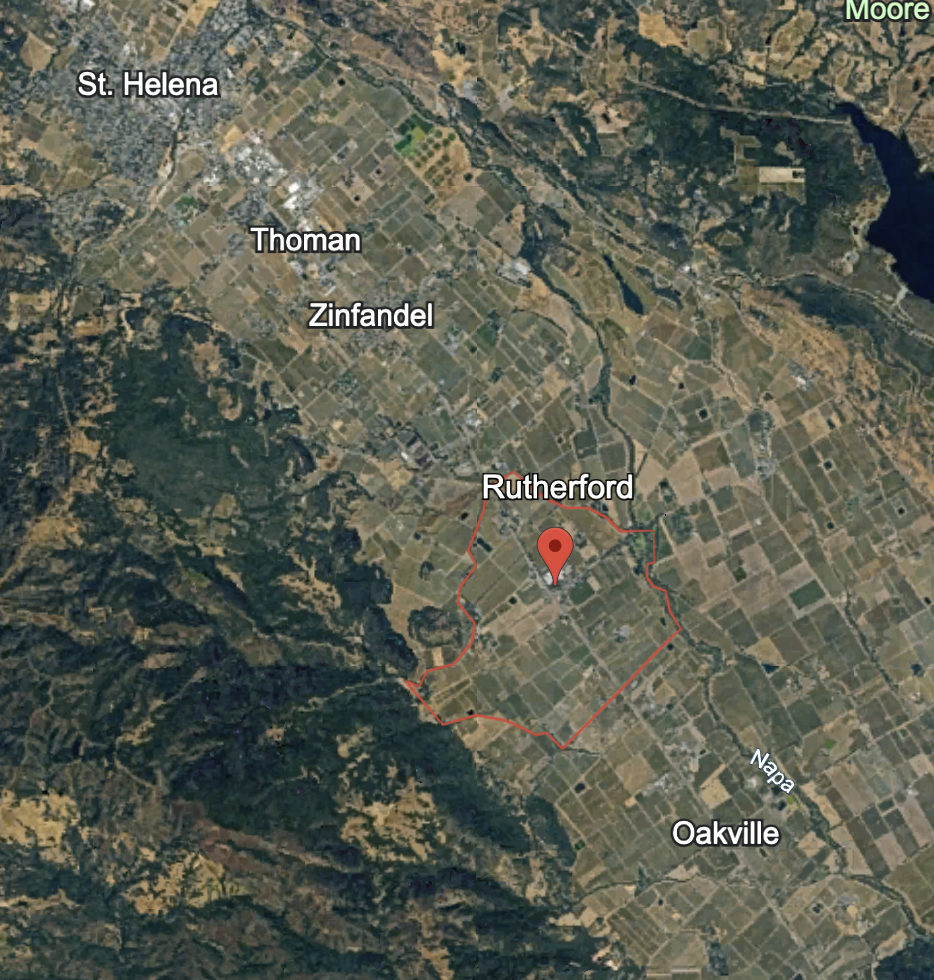
Rutherford takes its name from Thomas Rutherford, who in 1864 received a 1,040-acre wedding gift from George Yount's family. The community grew up around that property, and the same wide, sun-bathed stretch of valley floor that supported the Yount and Rutherford ranches now produces wines under the Rutherford AVA designation, established the same day as Oakville. Inglenook (founded 1879 by Finnish sea captain Gustave Niebaum and famously restored by Francis Ford Coppola from 1975 onward), Beaulieu Vineyard (founded 1900 by Georges de Latour), Caymus, Frog's Leap, Cakebread, and Honig all call Rutherford home. The Rutherford Dust Society was founded in 1994 to advance and protect the appellation's identity.
For everyday life, the commercial footprint is delightfully tiny. The Oakville Grocery, in operation at the same Highway 29 corner since 1881 and now owned by the Boisset Collection, is the oldest continuously operating grocery in California and a National Register property. In Rutherford, the Rutherford Grill, the historic Auberge du Soleil hotel and restaurant, and the Rancho Caymus Inn make up most of the village. The Napa County Agricultural Preserve — established in 1968 as the nation's first such designation — locks the surrounding land into farming, which keeps Oakville and Rutherford looking much as they did fifty years ago.
For real estate, scarcity is the defining feature. Estates here are passed down or sold privately, and a vineyard parcel rarely comes to market without a story. Buyers are typically choosing not just a property but a position within Napa Valley's deepest mythology — neighbors whose names appear on bottles in fine restaurants worldwide, and soils described in tasting notes by every serious critic. Oakville is reputed to be marginally cooler than Rutherford because of bay-influenced air; Rutherford carries the historical association with the dusty, gravelly soils that André Tchelistcheff once called the key to great California Cabernet. For visitors, the drive between them is a short one. For those fortunate enough to live there, the address itself is the point.
