
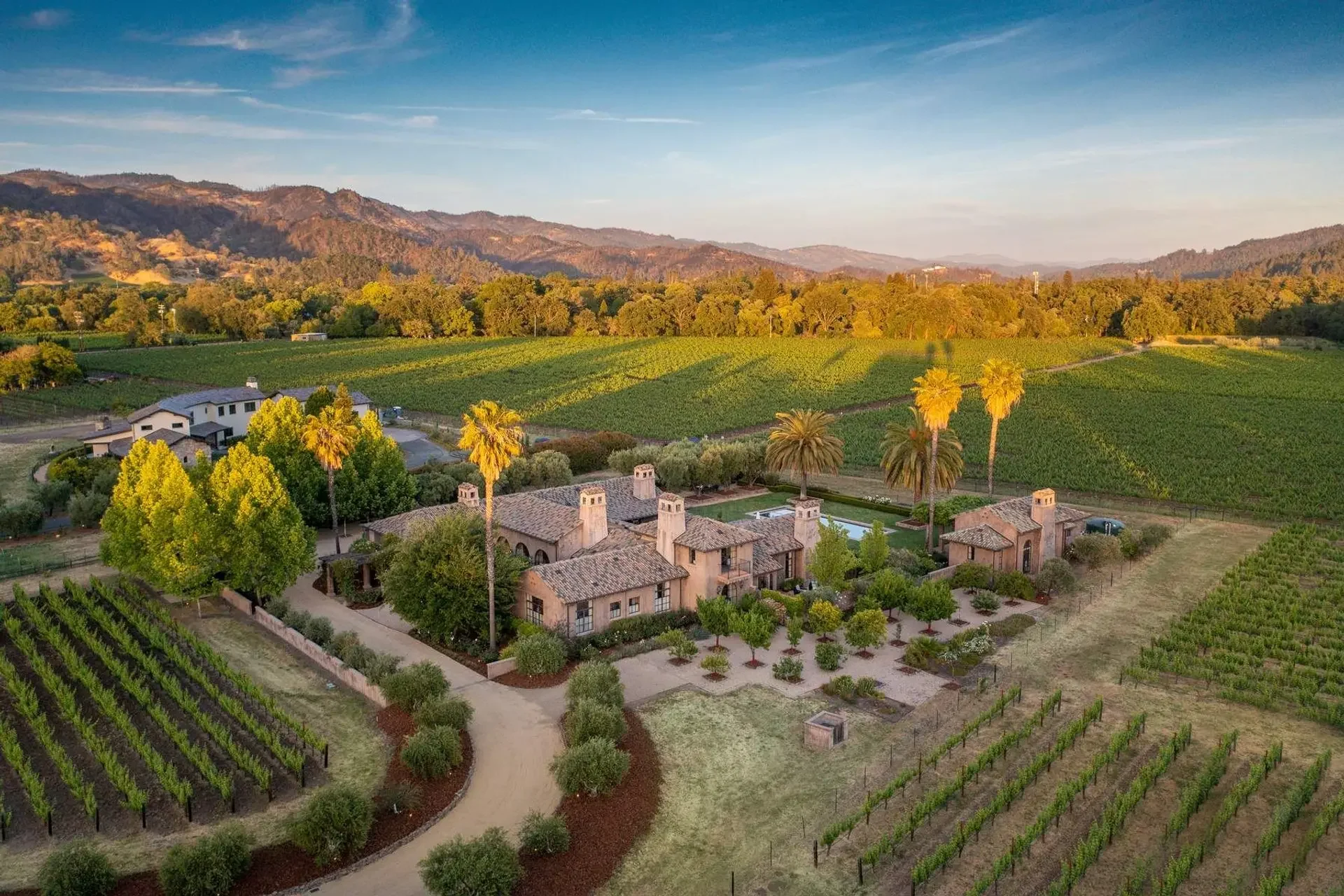
ANGWIN
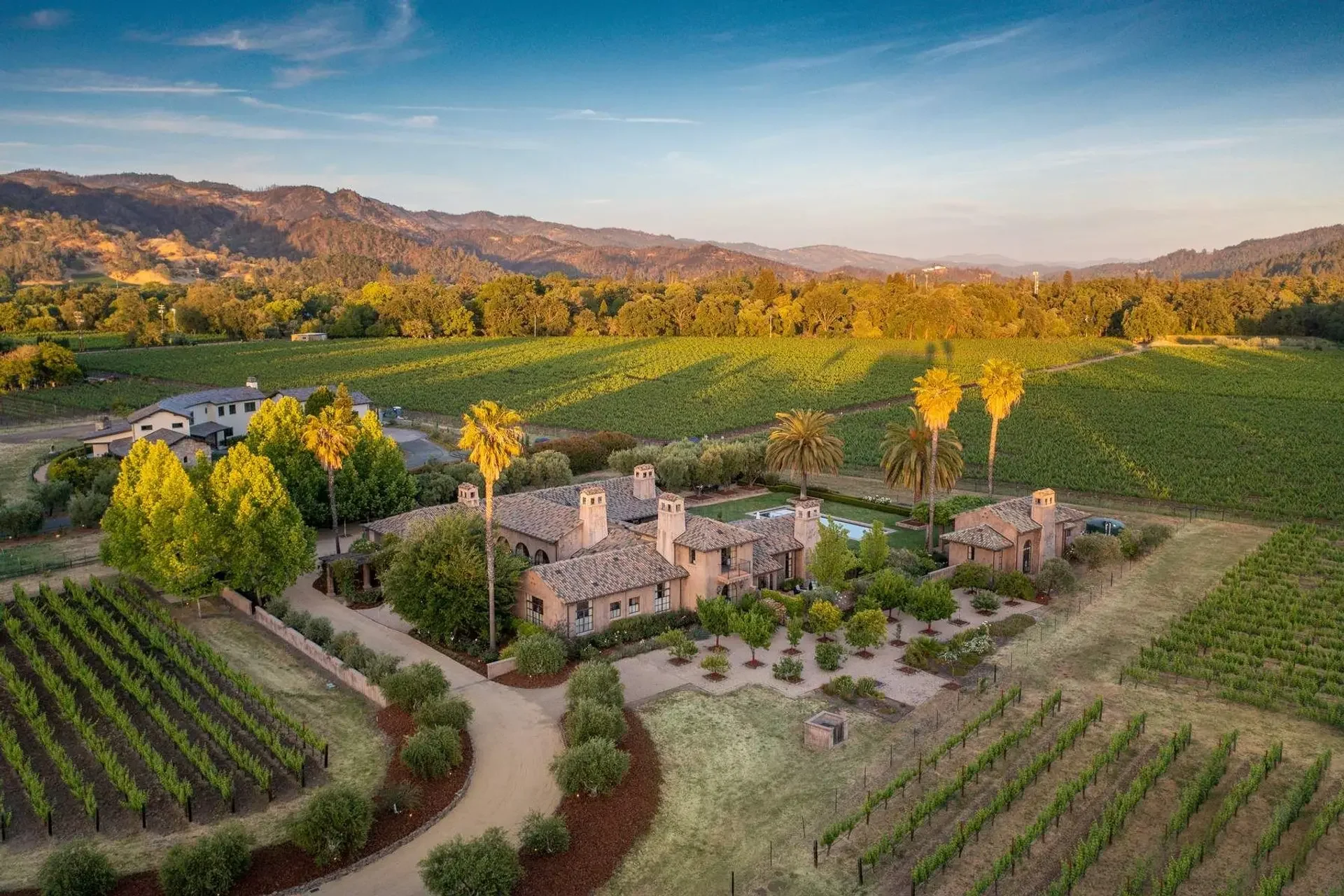
There is no other town quite like Angwin in Napa County. Tucked onto the broad shoulder of Howell Mountain at roughly 1,800 feet of elevation, this small unincorporated community sits above the fog line that blankets the valley floor most mornings, giving it light, air, and a temperament distinctly its own. The drive up from St. Helena unspools through redwoods and madrones, climbs past hairpin turns lined with vineyards, and ends in a quiet plateau where the dominant institution is not a winery but a college.
Angwin's modern history begins in 1909, when the Seventh-day Adventist Church purchased the 1,636-acre Angwin Resort for $60,000 and dedicated it as the new home of Pacific Union College. The college had originated in 1882 as Healdsburg Academy and relocated to take advantage of Howell Mountain's springs, timber, and clean mountain air. PUC remains the only four-year college in Napa County, and roughly 825 students animate the campus today across some sixty undergraduate programs.
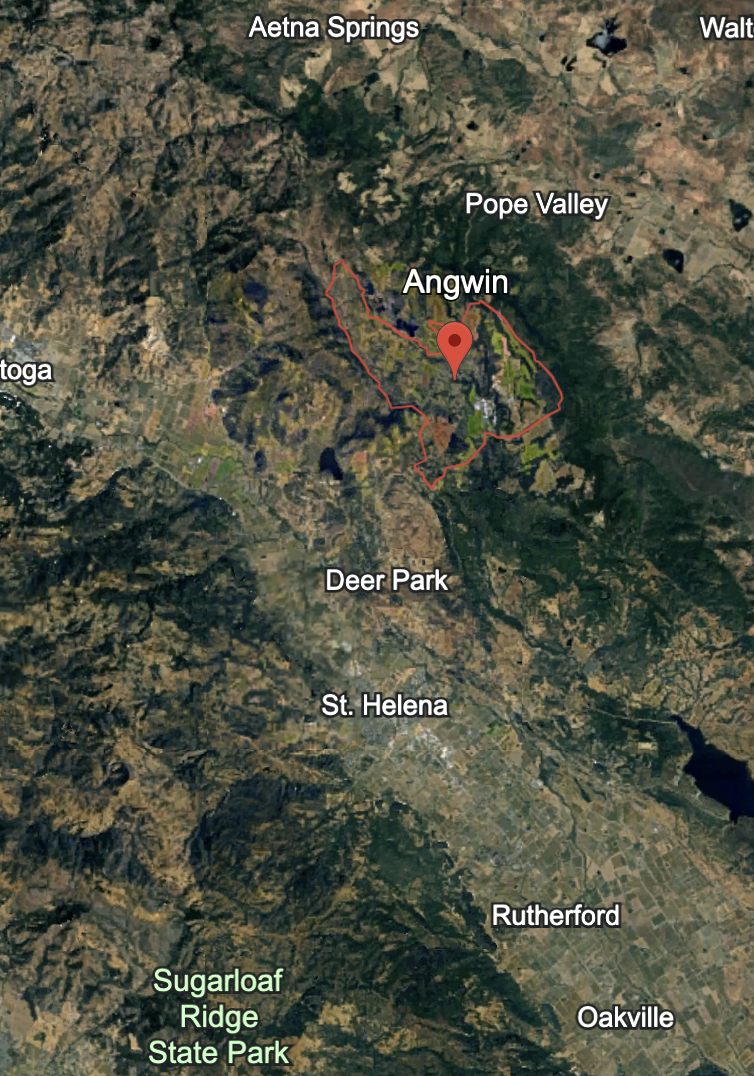
That Adventist heritage gives Angwin its singular character. Lifestyle here is quieter than down-valley, shaped by a community that has historically eschewed alcohol and embraced wholesome outdoor pursuits. The town's roughly 3,000 residents share access to more than thirty miles of trails maintained on the college's back-forty property in partnership with the Land Trust of Napa County, which has permanently protected over 800 acres of forestland. Hiking, cycling, horseback riding, and trail running are part of daily life. Angwin–Parrett Field, a small public-use airport on campus, supports the college's aviation program and the occasional private flight into wine country.
What makes Angwin distinct from the rest of Napa Valley is the way these worlds coexist. The community sits within the celebrated Howell Mountain AVA, surrounded by some of the most expensive vineyard land in California, yet downtown Angwin itself remains modest — a market, a café, the college bookstore, a post office. The contrast is part of its appeal. Residents enjoy the mild summer temperatures that come with elevation, the proximity of redwood forest, and the cultural cadence of a college town, all within fifteen minutes of St. Helena's restaurants and tasting rooms.
For Howell Mountain real estate, Angwin offers a unique value proposition. Buyers find a mix of mid-century ranch homes, faculty bungalows, and modern estates perched on view ridges, often on larger parcels than the valley floor allows. Long-time residents talk about the rare combination of small-town intimacy and rural land, with neighbors who actually know each other and a setting that feels far more remote than it actually is. For anyone considering Napa Valley mountain living, Angwin presents a community where the school calendar still shapes the year, where deer cross the road at dusk, and where the price of admission buys access to one of the most beautiful corners of the valley without the down-valley intensity.
CALISTOGA
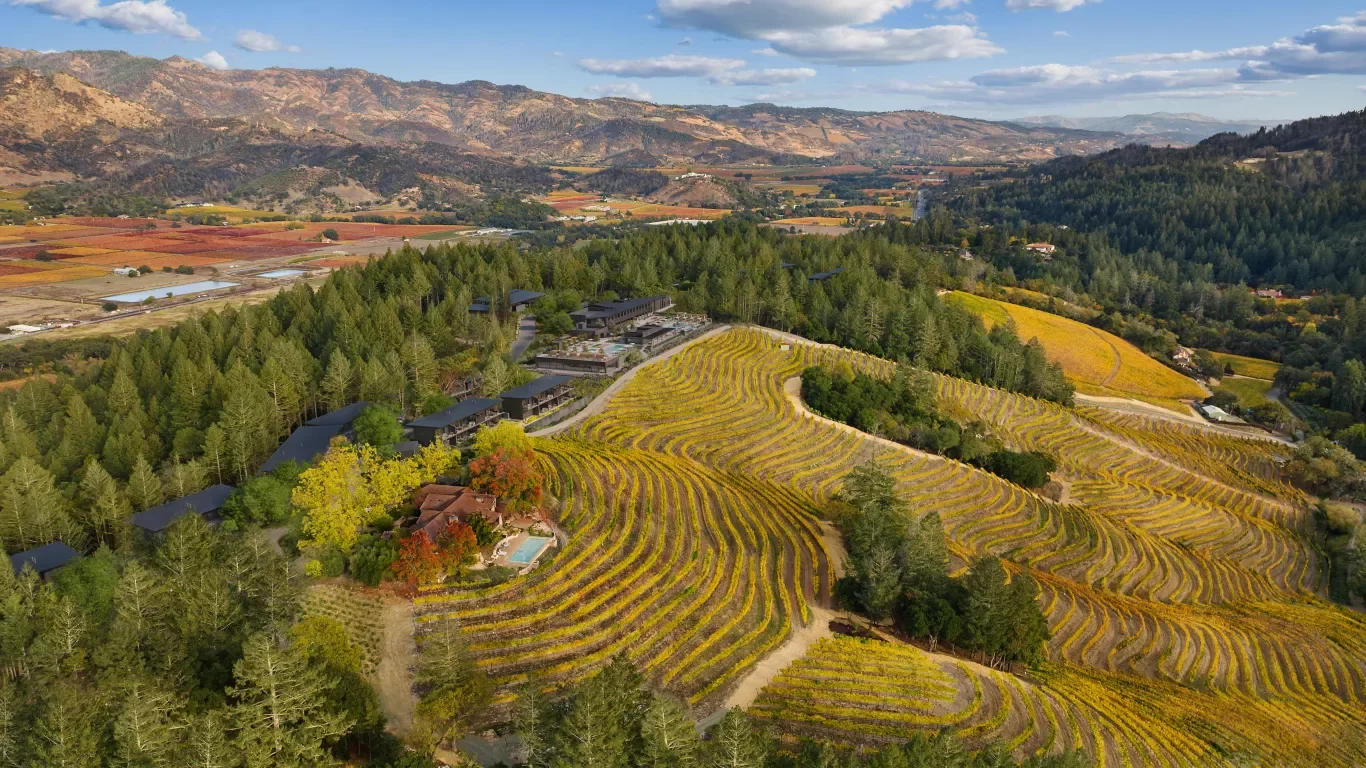
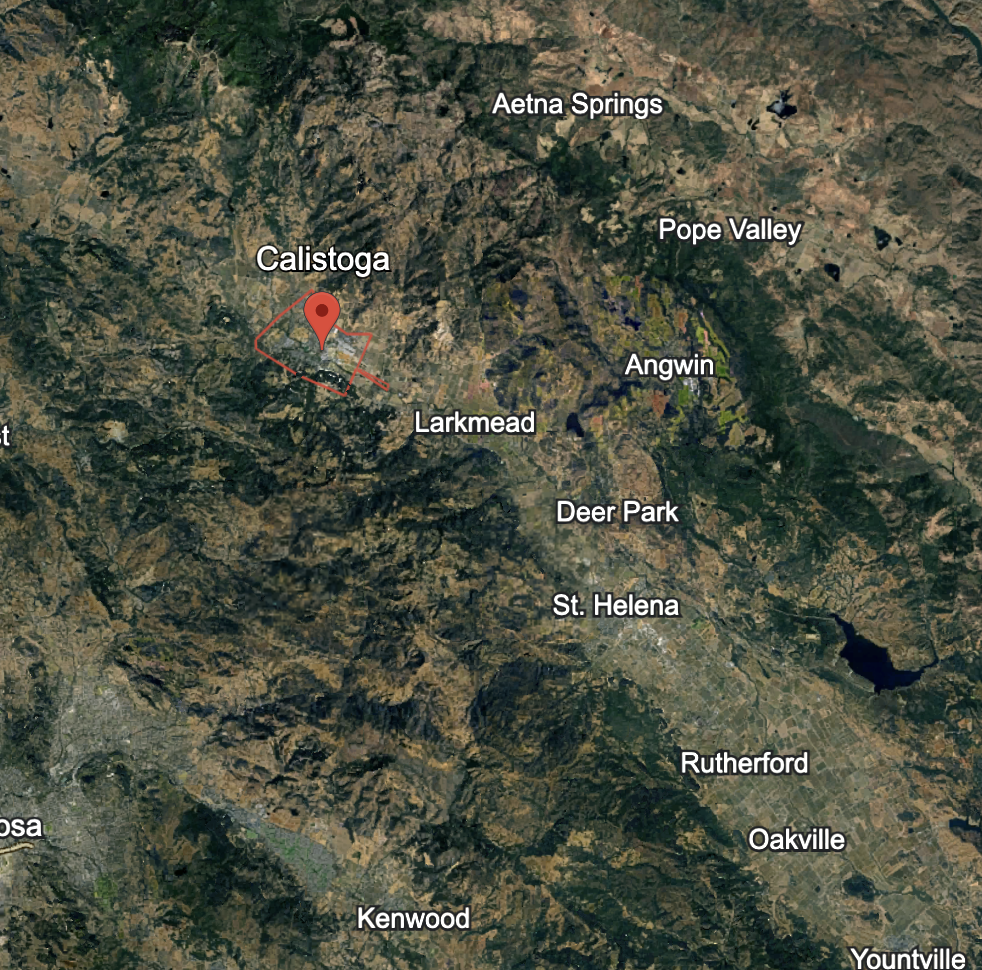
Calistoga has always known what it is. At the northern end of Napa Valley, where the Mayacamas and Vaca ranges crowd toward each other and the floor narrows beneath Mount St. Helena, the town has been a destination since 1862, when Mormon entrepreneur Samuel Brannan opened his Hot Springs Resort with a hundred landscaped acres, a hotel, twenty-five cottages, bathhouses, and a race track. According to local lore, Brannan slurred a speech and announced his ambition to make the place the "Calistoga of Sarafornia" rather than the Saratoga of California; the malapropism stuck.
That founding spirit still defines Calistoga's character. With a 2020 census population of 5,228, the town occupies a compact 2.6 square miles, much of it walkable along Lincoln Avenue. The geothermal activity that drew Brannan still bubbles to the surface in mineral pools, hot springs, and the volcanic mud baths for which Calistoga is internationally known. The mud — a mixture of volcanic ash from ancient Mount St. Helena eruptions, peat, and naturally heated mineral water — has been used for healing since the Wappo people occupied the area. Today nine spas continue the tradition, including Indian Springs (operating on Brannan's original site), Dr. Wilkinson's Backyard Resort & Mineral Springs, and Solage.
Two natural attractions just outside town root Calistoga in geological wonder. Old Faithful Geyser of California, on Tubbs Lane, erupts on a regular schedule of roughly thirty to forty minutes, shooting hot water about sixty feet skyward. The Petrified Forest on Petrified Forest Road preserves trees turned to stone by a Mount St. Helena eruption roughly 3.4 million years ago; the site was first uncovered in 1870 by a Swedish homesteader nicknamed Petrified Charlie, whom Robert Louis Stevenson met and immortalized in The Silverado Squatters.
Calistoga's downtown carries an old-Napa personality that contrasts with the polish of Yountville or the gloss of St. Helena. Lincoln Avenue is lined with locally owned restaurants, bakeries, wine tasting rooms, and shops; a municipal ordinance restricts formula chain businesses, which keeps the streetscape unmistakably local. Even when the Four Seasons Resort and Residences Napa Valley opened on November 1, 2021, at 400 Silverado Trail — the first Four Seasons sited within a working winery — the property folded into the town's pace rather than rewriting it.
For Calistoga real estate, the appeal is a particular kind of authenticity. Buyers find Victorian cottages downtown, mid-century ranches along the Silverado Trail, and a steady supply of working vineyards in the surrounding Calistoga AVA. Volcanic soils, the highest diurnal temperature shifts in Napa Valley, and a layered geological story all contribute to property values, but so does the unmistakable feeling that this is a town that still belongs to its residents. For first-time visitors, Calistoga is the place to soak, sip, and reset. For those who already know the valley, it is the place that has changed the least — and that, more than anything, is what people come back for.
NAPA CITY
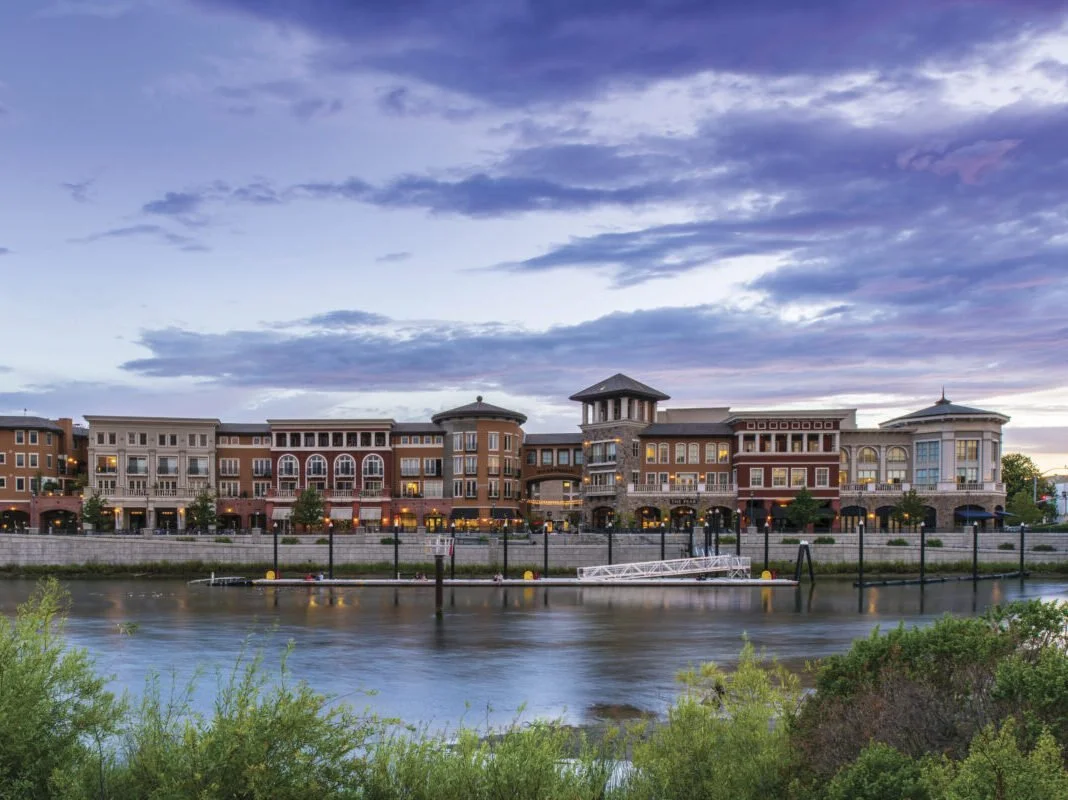
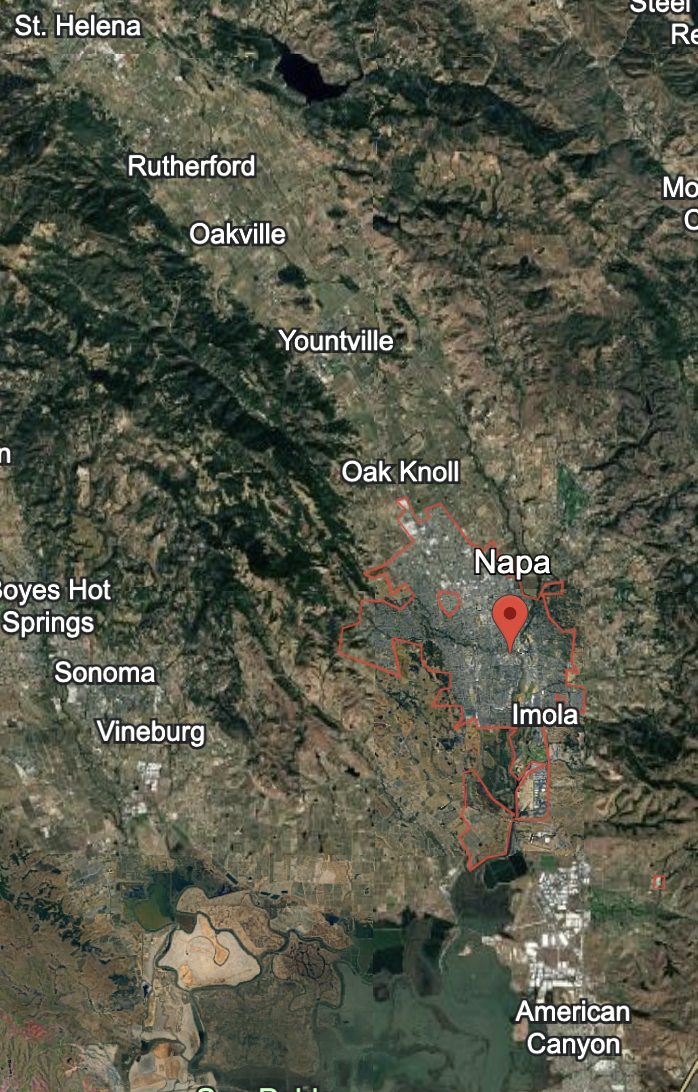
For decades, the City of Napa was something visitors drove through on their way to somewhere else. That changed. The southern anchor of Napa Valley and the county seat — with a population of about 80,000 — Napa has spent the last twenty years reclaiming its waterfront, reinvesting in its downtown, and emerging as a destination in its own right rather than a gateway to the up-valley towns.
The city's history runs deeper than most assume. Nathan Coombs founded Napa in the late 1840s on land carved from a Mexican land grant, naming it for a Wappo village whose name is generally understood to mean "fairy valley." Through the second half of the nineteenth century the town grew into a busy commercial center for ranchers, miners, and grape growers, with riverboats moving freight to San Francisco and saloons lining the streets near the wharves. The Napa River, which winds through downtown, has flooded the city dozens of times over its history; the Napa River Flood Project, completed in stages over the past two decades, finally allowed the city to embrace its waterfront rather than fence it off.
The catalyst for downtown's reinvention is the Oxbow Public Market, opened in December 2007 on First Street under the leadership of developer Steve Carlin, who had also designed San Francisco's Ferry Building Marketplace. Across 40,000 square feet, roughly twenty-two artisan vendors share space — Hog Island Oyster Co., The Fatted Calf, Model Bakery, Ritual Coffee, Gott's Roadside, Oxbow Cheese & Wine — and the market draws an estimated 1.8 to 2 million visitors a year. Locals shop there for produce, butchery, and bread; visitors graze across cuisines. Just upstream sit the CIA at Copia campus and a thriving cluster of independent restaurants, including the Michelin-recognized La Toque and Kenzo Napa.
Downtown itself rewards a slow walk. First Street and Main Street carry restored Victorian and Italianate facades, anchored by the Napa Valley Opera House (built 1879) and the Uptown Theatre. The riverwalk threads behind hotels and restaurants, connecting the Oxbow District to downtown's heart. Modern hotels such as the Archer and Andaz coexist with bed-and-breakfasts in older homes, and the Wine Train still rolls out from its McKinstry Street depot.
What makes the city distinct from the up-valley towns is range. Napa has true neighborhoods — Old Town, Browns Valley, Alta Heights, Coombsville at its eastern edge — each with its own character, schools, and price points. Napa real estate spans Craftsman bungalows under $1 million, riverside condos for retirees and pied-à-terre buyers, and substantial estates in the foothills. The city's diversity is its strength: a working town with a deep cultural life that happens to sit at the southern end of one of the world's most celebrated wine regions. For buyers who want full-time amenities, walkable streets, and access to everything north of them, downtown Napa has become the practical center of valley life.
OAKVILLE / RUTHERFORD
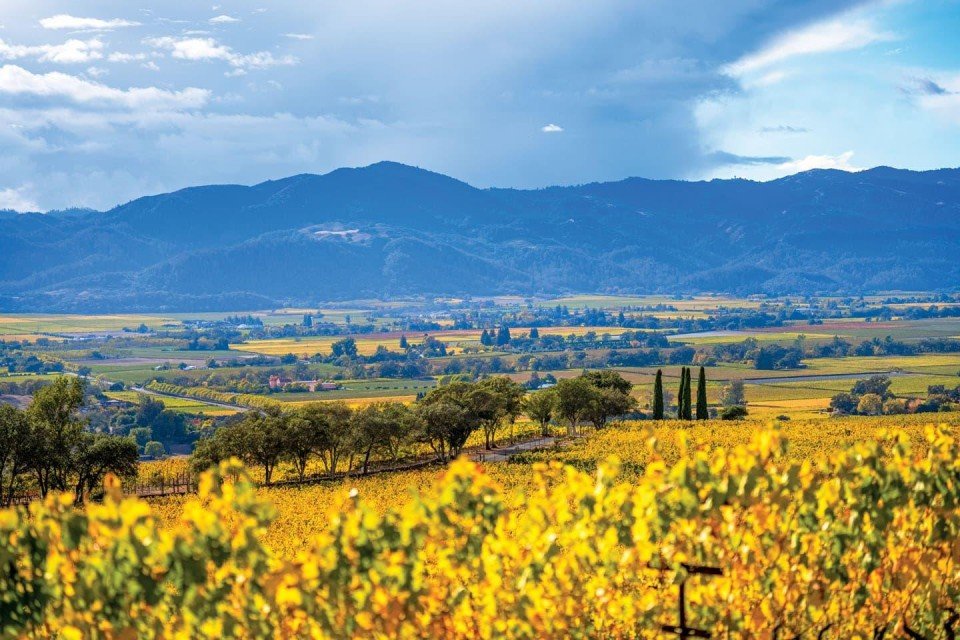
Between Yountville and St. Helena, Highway 29 passes through two communities that barely register as towns and yet sit at the very heart of Napa Valley's identity. Oakville and Rutherford are unincorporated census-designated places whose populations — 49 in Oakville and 115 in Rutherford at the 2020 census — give some sense of just how thoroughly agriculture has won out over development. There is no downtown in either, no stoplight on the highway between them, and the land that does exist is, acre for acre, among the most coveted on earth.
Oakville's recorded history begins in the 1860s, when the village grew up around a Napa Valley Railroad water stop founded by Samuel Brannan. The name came from the dense groves of valley oaks that once defined the area. H.W. Crabb bought 240 acres in 1868 and established what would become the legendary To Kalon vineyard — Greek for "the beautiful" — which grew to 430 acres by 1880 and remains the source of some of the most expensive Cabernet Sauvignon in the world. In 1903 the USDA established an experimental vineyard station here that the University of California, Davis still operates. Today the Oakville AVA, designated in 1993, contains roughly two dozen wineries on more than 5,000 vineyard acres, including Robert Mondavi, Opus One, Silver Oak, Far Niente, Screaming Eagle, and Harlan Estate.
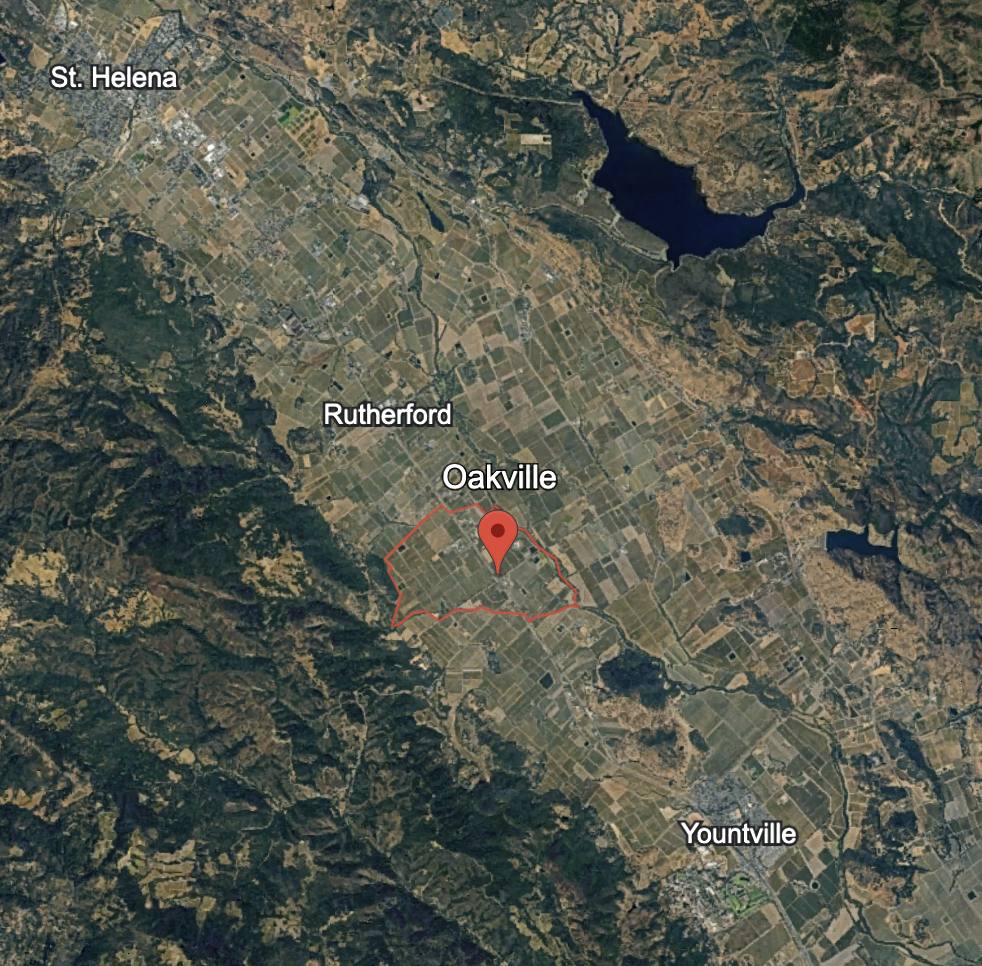
Rutherford takes its name from Thomas Rutherford, who in 1864 received a 1,040-acre wedding gift from George Yount's family. The community grew up around that property, and the same wide, sun-bathed stretch of valley floor that supported the Yount and Rutherford ranches now produces wines under the Rutherford AVA designation, established the same day as Oakville. Inglenook (founded 1879 by Finnish sea captain Gustave Niebaum and famously restored by Francis Ford Coppola from 1975 onward), Beaulieu Vineyard (founded 1900 by Georges de Latour), Caymus, Frog's Leap, Cakebread, and Honig all call Rutherford home. The Rutherford Dust Society was founded in 1994 to advance and protect the appellation's identity.
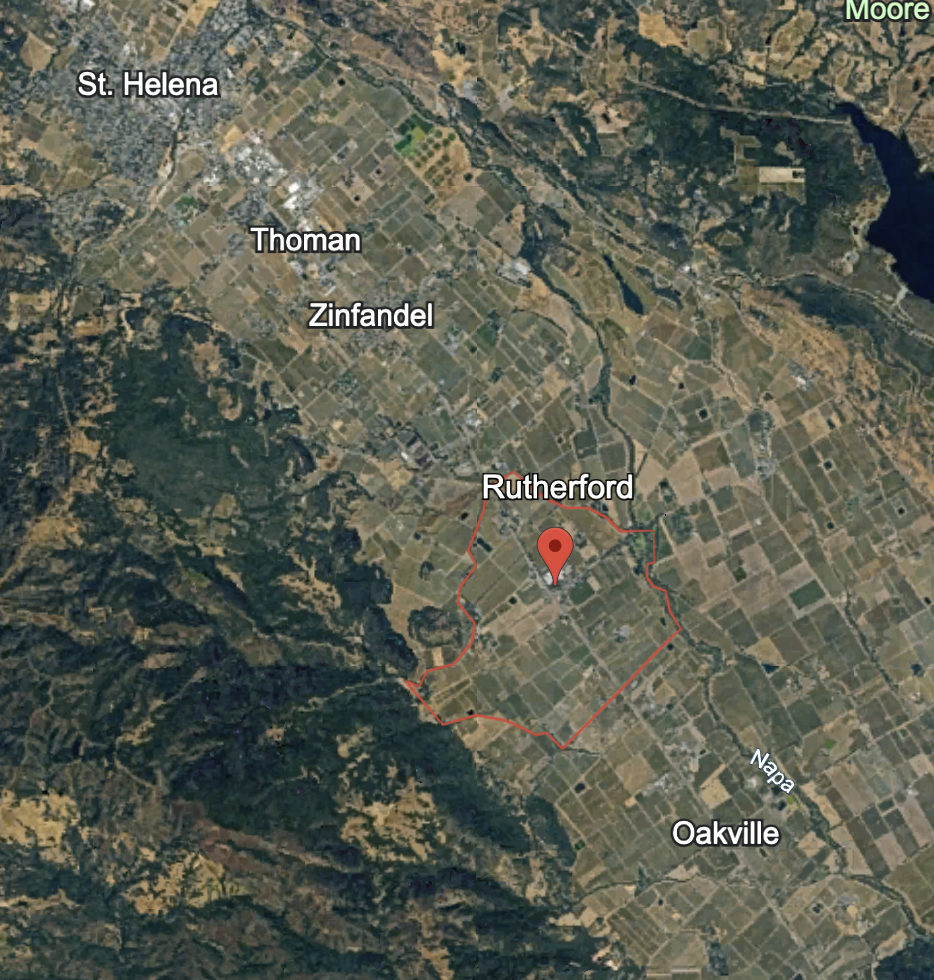
For everyday life, the commercial footprint is delightfully tiny. The Oakville Grocery, in operation at the same Highway 29 corner since 1881 and now owned by the Boisset Collection, is the oldest continuously operating grocery in California and a National Register property. In Rutherford, the Rutherford Grill, the historic Auberge du Soleil hotel and restaurant, and the Rancho Caymus Inn make up most of the village. The Napa County Agricultural Preserve — established in 1968 as the nation's first such designation — locks the surrounding land into farming, which keeps Oakville and Rutherford looking much as they did fifty years ago.
For real estate, scarcity is the defining feature. Estates here are passed down or sold privately, and a vineyard parcel rarely comes to market without a story. Buyers are typically choosing not just a property but a position within Napa Valley's deepest mythology — neighbors whose names appear on bottles in fine restaurants worldwide, and soils described in tasting notes by every serious critic. Oakville is reputed to be marginally cooler than Rutherford because of bay-influenced air; Rutherford carries the historical association with the dusty, gravelly soils that André Tchelistcheff once called the key to great California Cabernet. For visitors, the drive between them is a short one. For those fortunate enough to live there, the address itself is the point.
YOUNTVILLE
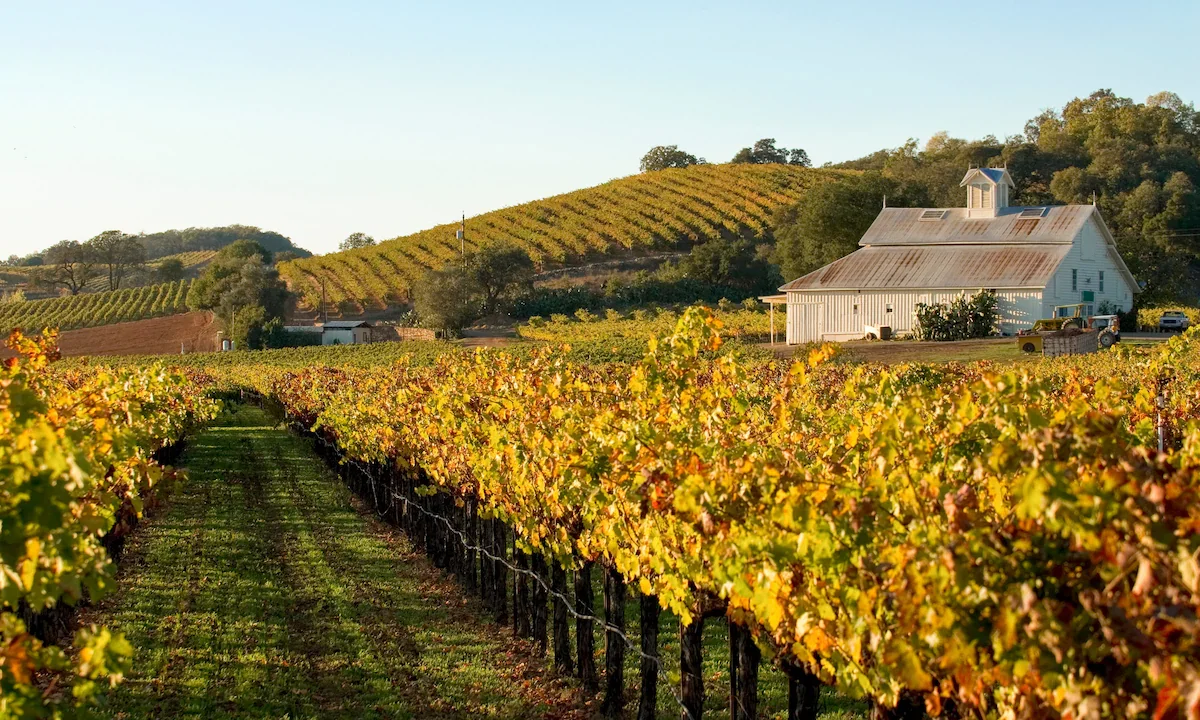
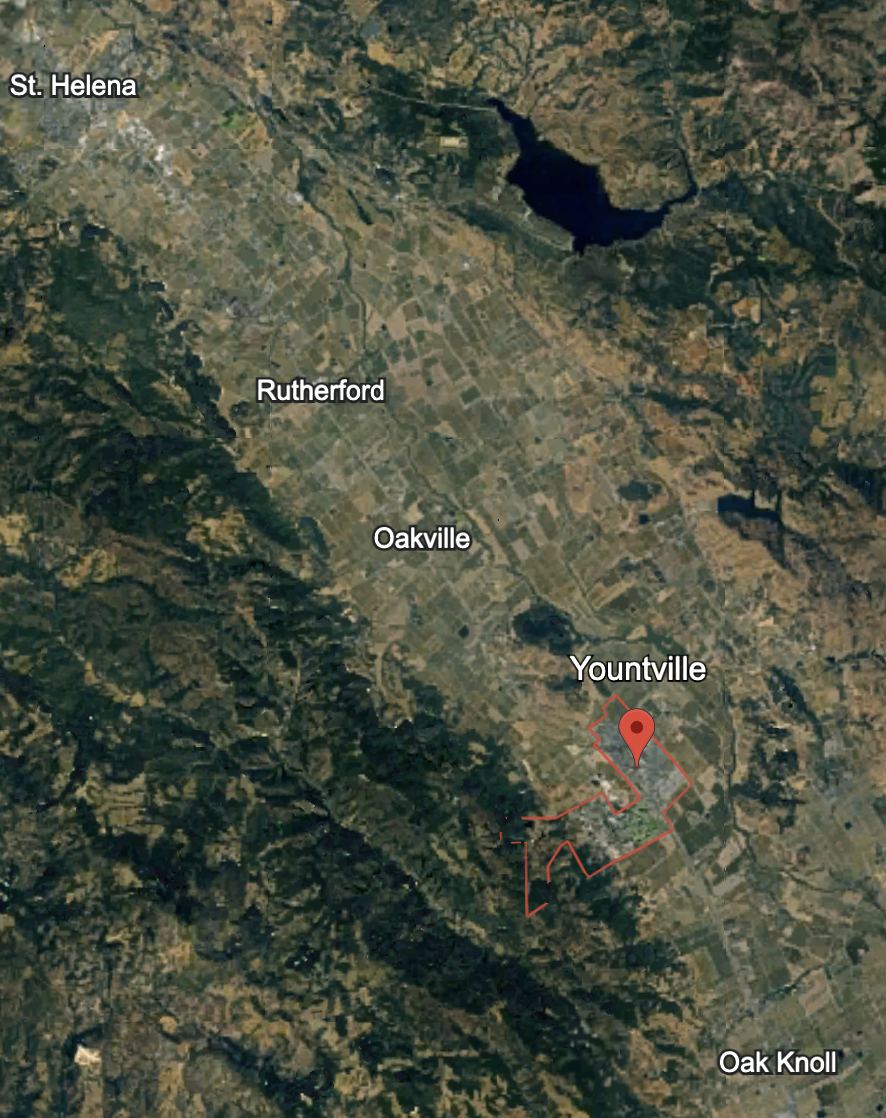
Yountville is the small town that proves the old idea that limits, properly applied, can produce magic. At just 1.5 square miles and a 2020 census population of 3,436 — nearly a third of whom live at the Veterans Home of California — Yountville has become, almost improbably, one of the most concentrated dining destinations on the planet, with more Michelin stars per capita than anywhere else in North America.
The town traces its founding to George C. Yount, a North Carolina trapper who received an 11,887-acre Mexican land grant called Rancho Caymus in 1836 and is generally credited with planting Napa Valley's first vineyard. Yount laid out a six-block village in the early 1850s; for a time it was called Sebastopol, but to avoid confusion with another California town of the same name, residents renamed it Yountville in 1867 after Yount's death. Rail service arrived in 1868, bringing newcomers, including Gottlieb Groezinger, whose 1870 stone winery complex — now V Marketplace — still anchors Washington Street.
Gourmet dining took root in Yountville in 1977 when Philippe Jeanty opened the restaurant at Domaine Chandon, the California outpost of Champagne house Moët & Chandon. The transformation accelerated in 1994 when Thomas Keller purchased The French Laundry from founder Sally Schmitt; the restaurant earned three Michelin stars, was twice named the best restaurant in the world by The World's 50 Best, and built an entire culinary district around itself. Keller's Bouchon Bistro, Bouchon Bakery, and Ad Hoc all sit within a few minutes' walk. Bistro Jeanty, Bottega, Ciccio, and the restaurant at the North Block Hotel round out a remarkable concentration of talent.
Lifestyle in Yountville is built for the stroll. Washington Street runs the length of the village, anchored by V Marketplace at one end and the Yountville Art Walk — a rotating outdoor sculpture exhibit — and Napa Valley Museum at the other. The town is the only launch site for hot-air balloons in Napa Valley, with sunrise lifts that float over the vineyards before settling into a Champagne breakfast. Six buildings here are listed on the National Register of Historic Places, including the Veterans Home Chapel of 1918, and two more are California Historical Landmarks. Yountville carries its own AVA designation as well, with vineyards on the cool southern end of the valley floor producing some of the most refined Cabernet Sauvignon in the appellation.
For Yountville real estate, scarcity again drives value. The municipal footprint is small, growth is tightly managed, and properties range from townhomes in the village to estates on the surrounding vineyard land. Buyers tend to be people who want to walk to dinner in flip-flops and still find themselves at a three-star restaurant, or who want a Napa pied-à-terre that makes a wine-country weekend as effortless as possible. For first-time visitors, Yountville is the obvious base. For those who already know the valley, it is the place where Napa's most precise culinary ambitions and its small-town walkability meet — and where, after the day-trippers leave, the village settles into a quiet that feels like a secret.
ST. HELENA
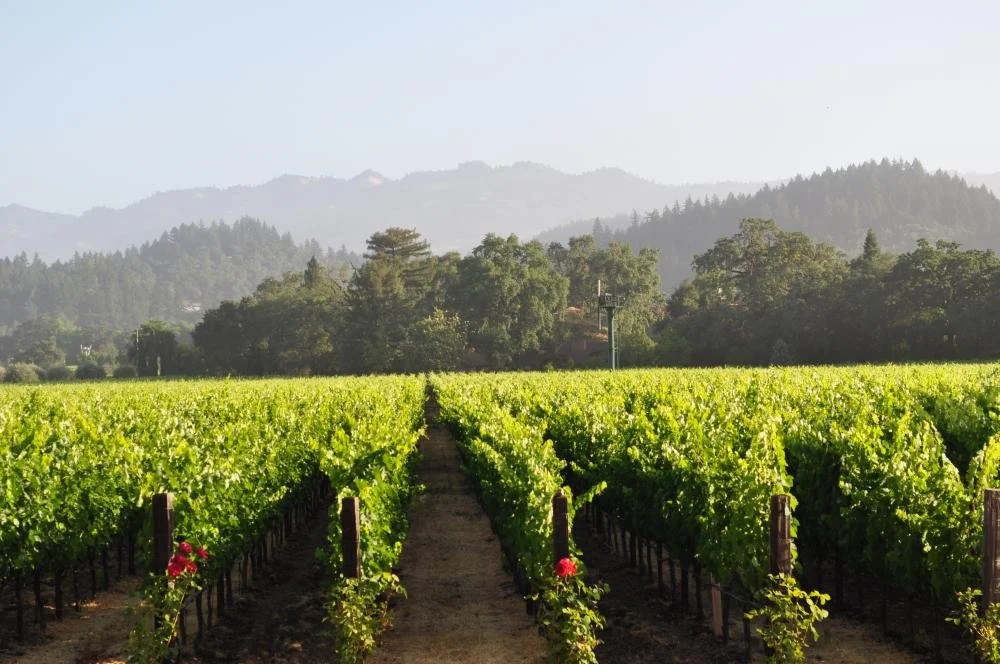
St. Helena is what most people picture when they imagine Napa Valley — a tree-lined Main Street of brick storefronts, vineyards pressing close on every side, and a history that runs straight through the early years of California winemaking. The town was founded in 1854 when Henry Still and Charles Walters bought 126 acres west of present-day Main Street and offered free lots to anyone who would open a business. Incorporation followed on March 24, 1876, and by then the area had already become the center of commercial winegrowing in the valley.
The town's wine pedigree is profound. Charles Krug, a Prussian immigrant, founded Napa Valley's oldest winery in 1861 at 2800 Main Street; the property became a California Historical Landmark and joined the National Register in 1974. Beringer Vineyards followed in 1876 and is the oldest continuously operating winery in the valley; the Beringer Rhine House, completed in 1884 as Frederick Beringer's residence, remains a National Register property and a defining piece of Main Street architecture. Just north of town, the Bale Grist Mill State Historic Park preserves a water-powered mill built in 1846 by Dr. Edward Turner Bale, with a thirty-six-foot wheel that still turns — one of only two water-driven grist mills remaining west of the Mississippi.
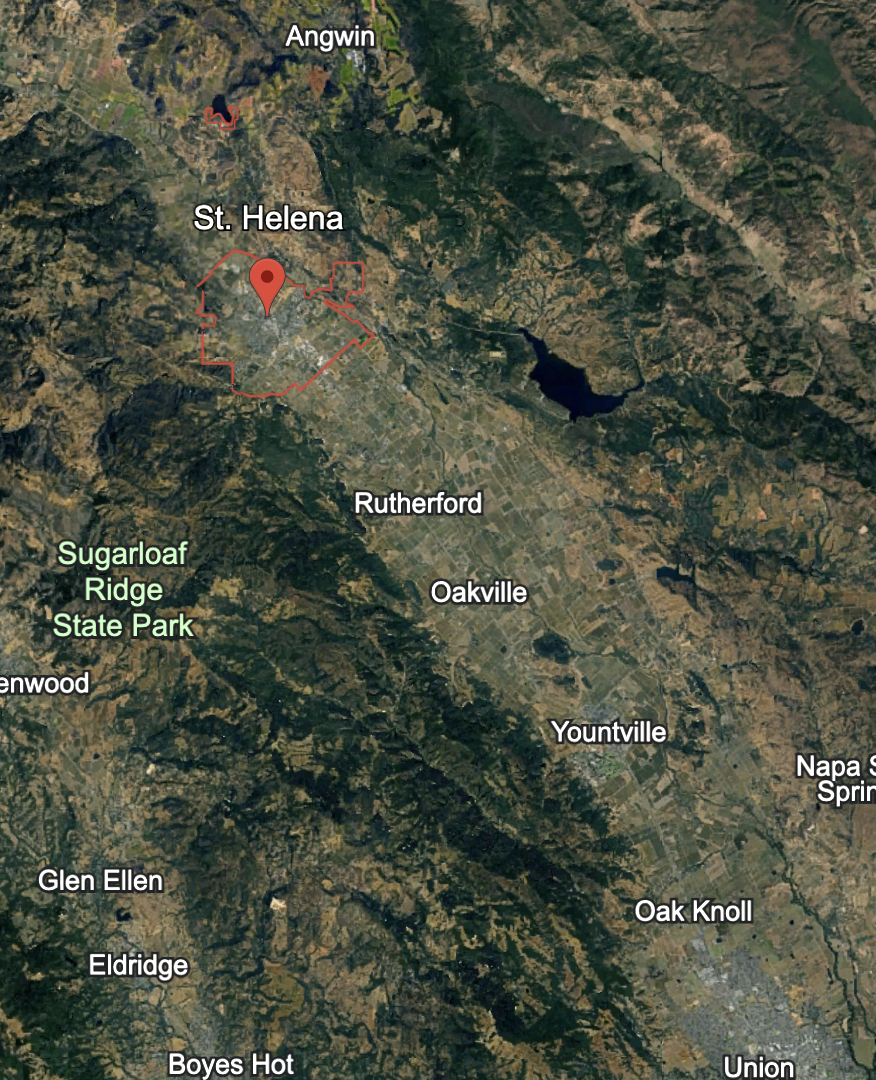
Lifestyle here balances quiet residential streets with a downtown that punches well above its size. The 2020 census recorded a population of 5,430, but the daily life of St. Helena draws in residents from across the upvalley, and the city's median household income reflects both that and the gravitational pull of agriculture's wealth. A long-standing ordinance restricts formula chain businesses, which has kept Main Street firmly local — Woodhouse Chocolate occupies an 1890s brick building, Model Bakery has been turning out English muffins for the better part of a century, and a steady rotation of fine dining, galleries, and independent boutiques fills the rest. The Silverado Museum on Library Lane, founded in 1969 by Norman and Charlotte Strouse, holds the largest displayed collection of Robert Louis Stevenson's belongings in the world.
The Culinary Institute of America at Greystone gives St. Helena another layer of identity. Housed in an 1889 stone structure built by William Bowers Bourn II as the world's largest stone winery at the time, the CIA's first branch campus opened in 1995 after a $15 million renovation and continues to train chefs, baking and pastry professionals, and wine and beverage students at 2555 Main Street. The campus restaurant, shop, and public programs give residents a constant supply of food culture year-round.
For St. Helena real estate, the appeal is enduring. Historic Victorians sit a few blocks from the highway alongside modern farmhouses and substantial vineyard estates. Buyers come for the postcard quality of the place and stay for what they discover beneath it: a working community with a hospital, a college campus, a public library, and an unmistakable sense that the people who live here intend to keep it the way it is. For those entering Napa Valley for the first time, St. Helena reads as the heart of the experience. For longtime residents, it remains what it has always been: the historic and commercial center of upvalley life.